
 ES
ES  EN
EN  DE
DE LiFePO4 (Lithium Iron Phosphate) batteries are now widely used in RVs, solar energy storage systems, marine equipment, backup power solutions, and portable power stations, electric motorcycle, high speed scooter, etc. Compared with traditional lead-acid batteries, they offer longer lifespan, faster charging, and more stable performance.
However, many users do not realize that even a high-quality LiFePO4 battery can suffer from capacity loss, shortened lifespan, or even safety risks if it is charged improperly over time.
The good news is that most of these problems can be easily avoided with the right charging habits.
In this article, we’ll walk you through the most common LiFePO4 charging mistakes and explain how to charge LiFePO4 batteries safely to maximize battery life and performance.
Why Proper LiFePO4 Charging Matters
One of the biggest advantages of LiFePO4 batteries is their long cycle life. A high-quality battery can often deliver 2,000–5,000 charge cycles or more. However, improper charging habits can dramatically reduce that number.
Unlike lead-acid batteries, LiFePO4 batteries require precise charging voltage and intelligent protection systems. Using the wrong charger or ignoring temperature conditions can permanently damage battery packs over time.
Understanding the most common LiFePO4 charging mistakes helps protect your battery investment and ensures reliable long-term performance.
Mistake #1: Using a Lead-Acid Charger for a LiFePO4 Battery
This is one of the most common and damaging mistakes users make.
Many people assume any 12V charger will work with any 12V battery. Unfortunately, LiFePO4 batteries and lead-acid batteries have completely different charging requirements.
Lead-acid chargers typically use charging profiles that include:
- Bulk charging
- Absorption charging
- Float charging
- Equalization mode
The problem is that LiFePO4 batteries do not need float charging or equalization. In fact, these stages can stress the battery and shorten its lifespan.
Why This Is Dangerous
Using a lead-acid charger can cause:
- Overcharging
- Excess heat buildup
- Reduced battery lifespan
- Battery Management System (BMS) shutdowns
How to Avoid It
Always use a dedicated LiFePO4 charger designed specifically for lithium iron phosphate chemistry.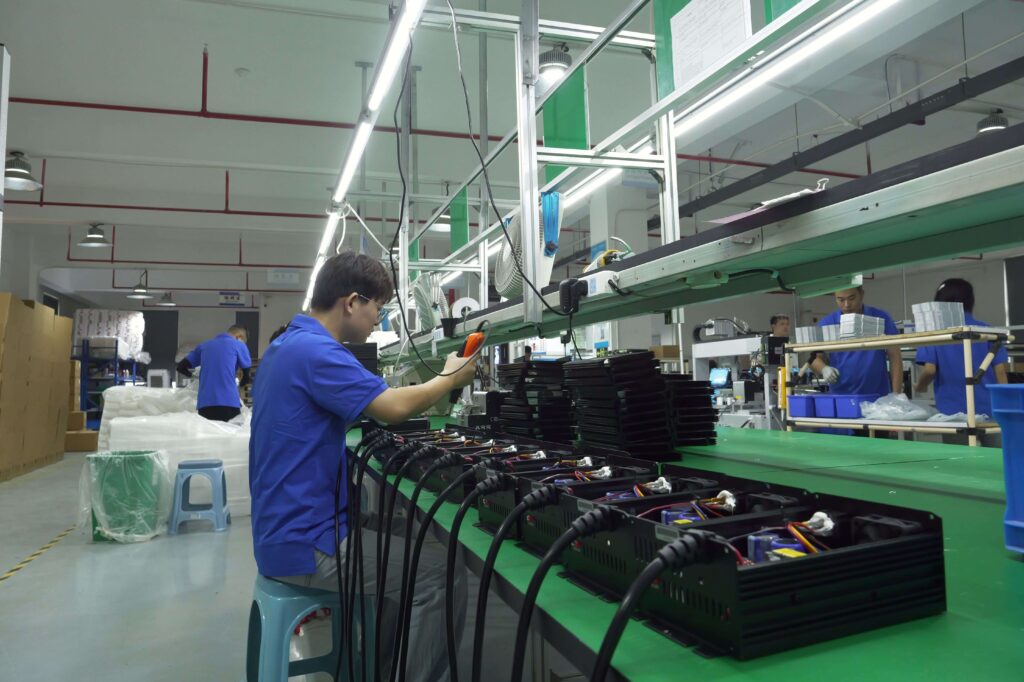
A proper LiFePO4 charger should provide:
- Constant Current / Constant Voltage (CC/CV) charging algorithm
- Correct voltage regulation
- Automatic charging termination
- Stable current output
- Multiple safety protections (over-voltage, over-current, short-circuit, and over-temperature protection)
If you’re wondering how to charge LiFePO4 battery safely, the first step is simply choosing the right charger.
Mistake #2: Leaving the Battery Connected to a Charger Indefinitely (Overcharging)
A common question users is: Can a LiFePO4 battery be overcharged?
The short answer is yes — although it behaves differently from older battery chemistries.
Modern LiFePO4 batteries are equipped with an integrated Battery Management System (BMS) that disconnects the cells when voltage exceeds a safe threshold. However, relying solely on the BMS as the only line of defense against overcharging is risky.
If you use a charger without automatic shutoff, or leave the battery connected to a trickle charger designed for the wrong battery chemistry, the cells can remain under continuous high-voltage stress.
This constant voltage pressure gradually causes microscopic degradation inside the battery, leading to capacity loss and accelerated aging. In extreme cases involving BMS failure, it may even result in cell swelling.
How to Prevent Overcharging
Use a Smart LiFePO4 Charger
A high-quality smart charger will automatically stop charging once the battery reaches full capacity.
Avoid Voltage Mismatch Errors
Cross-voltage charging is one of the most overlooked LiFePO4 charging mistakes.
A 12V LiFePO4 battery should only be paired with a dedicated 14.6V charger, while 24V and 48V battery packs require strictly matched higher-voltage chargers.
Using the wrong voltage charger can directly trigger BMS protection shutdowns or even permanently damage battery packs.
Avoid Cheap Chargers
Low-quality chargers may provide unstable voltage or fail to terminate charging correctly.
Mistake #3: Storing the Battery at 100% Charge for Long Periods
Another area that often confuses users is whether LiFePO4 batteries should be stored fully charged during seasonal storage or long periods of inactivity.
For daily use, charging a LiFePO4 battery to 100% is completely normal and necessary because it allows the BMS to balance individual cells properly.
However, leaving the battery at 100% state of charge for several months without use can negatively impact battery health.
When lithium batteries sit fully charged for long periods, their internal structure experiences higher chemical stress. If stored in warm environments, permanent capacity loss can accelerate even further.
On the other hand, storing a battery at 0% charge is also dangerous because the battery’s natural self-discharge may cause voltage to fall below the low-voltage cutoff threshold, potentially damaging the battery.
How to Avoid It
If you plan to store your LiFePO4 battery for more than a few weeks, charge or discharge it to around 50%–60% state of charge (SoC).
Store the battery in a cool, dry place and check the voltage every 3–6 months to ensure excessive self-discharge has not occurred.
Mistake #4:Buying Cheap Chargers Without Protection Features
A charger is not just a power adapter — it’s the control center for your battery’s health and safety.
Cheap chargers may lack critical protections that prevent damage during charging.
Essential Charger Safety Features
A quality LiFePO4 charger should include:
- Overcharge protection
- Short-circuit protection
- Reverse polarity protection
- Over-temperature protection
- Stable voltage regulation
Investing in a trusted charger brand helps prevent expensive battery failures later.
XYM Brand LiFePO4 Chargers: Built for Full Safety & Stability
At powerforever, safety and battery longevity are at the core of our product design philosophy And certified by CE, FCC, ROHS, SAA.
Our LiFePO4 chargers are specifically engineered for lithium iron phosphate batteries and equipped with multiple intelligent protection systems to help users avoid the charging mistakes mentioned above.
All XYM chargers are precisely calibrated for 12V / 24V / 48V / 60V / 72V / 84V LiFePO4 battery systems, ensuring zero voltage mismatch and stable long-term cycle charging performance.